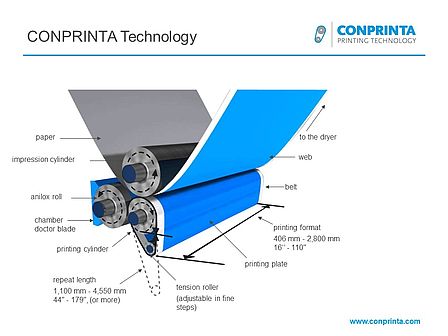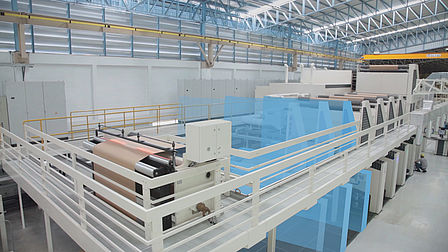
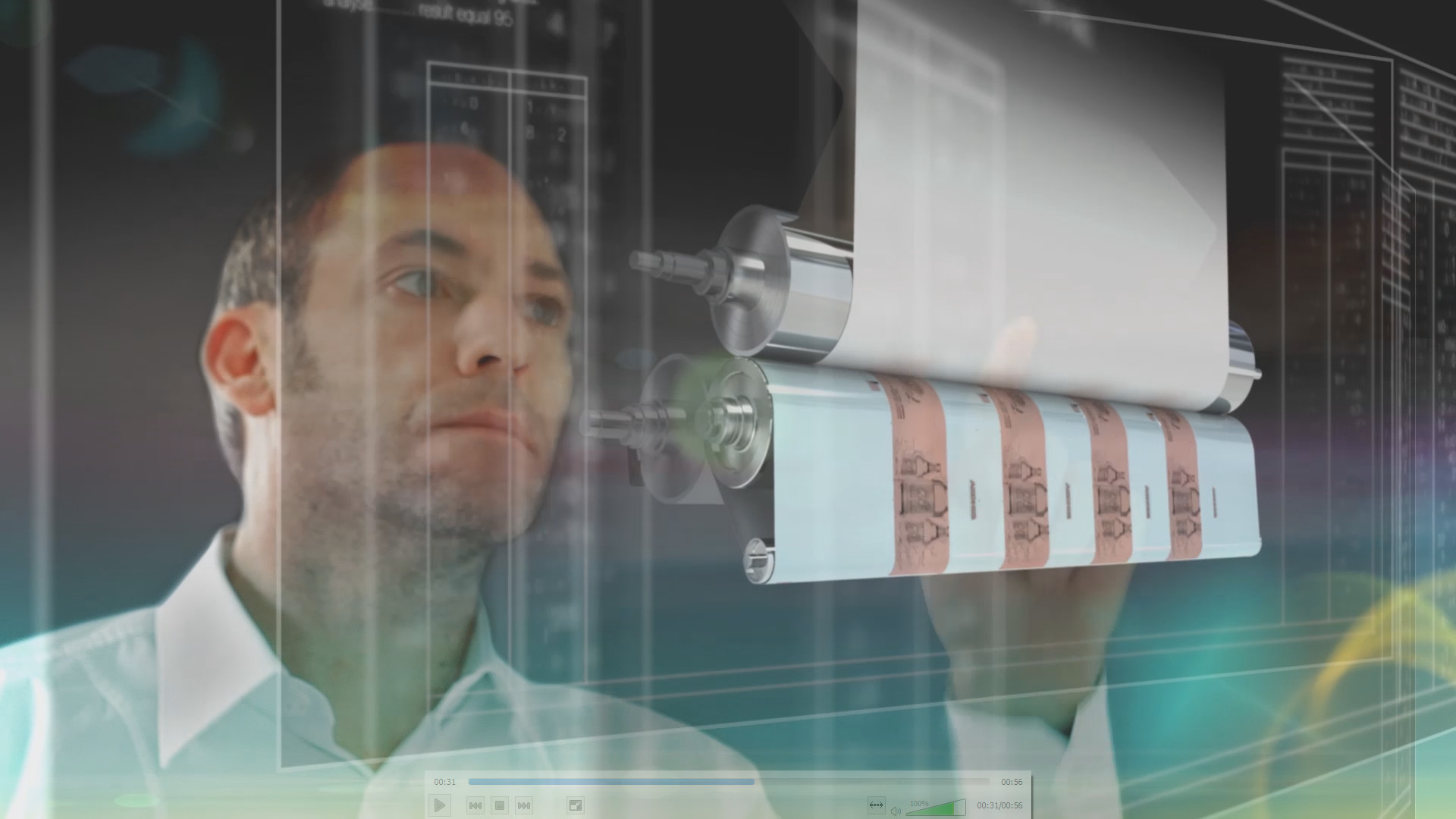
As a specialist in corrugated preprint, we know the demands that the material places on the printing process, as well as the limits of a typical printing line. Based on our knowledge of materials and machines, our experts have developed a patented servo-driven belt technology. It enables nearly infinite print lengths and thus nearly unlimited flexibility.
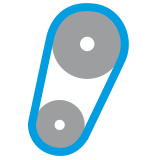
The belt – the print band – a non-stretchable film, runs across two rollers that can be set flexibly to any height. This continuously variable format flexibility is available only from our CONPRINTA belt technology. It requires only minimal preparation and very short setup times, thus allowing fast order changeover, as no cylinder need to be changed out. This saves you money, as the printing plates can stay on the belts and scores points with reliable, high-quality print results.
The belt technology in our IMD printing machines enables "PrePrint Volume on Demand", our process solution that can benefit both; you and your customers.
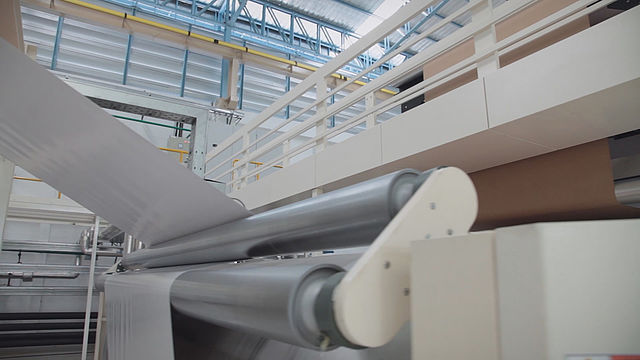
In our increasingly digitized world, expectations for production machines are constantly rising. Networking of machines and people is increasingly important to allow the best possible level of flexibility, which especially includes individuality of products and shorter production times.
CONPRINTA has used IMD technology since back in the 1990s. IMD – Individual Motor Drive—means that fully automated data exchange is possible. It is used in all CONPRINTA printing systems. This control system also makes many mechanical components unnecessary, which greatly reduces maintenance and increases the reliability of the system. With interfaces for all leading data protocols, order-related data can be captured and implemented digitally.
Key benefits of the CONPRINTA IMD system:
We use cookies. Some of them are necessary to make the website usable. Others help us display information that is relevant and engaging to you. As data protection is important to us, we ask you to decide on the scope of use. You can either accept all cookies or choose your individual settings. Thanks and enjoy our website!